Quiet Sovereignty
A Study in Presence
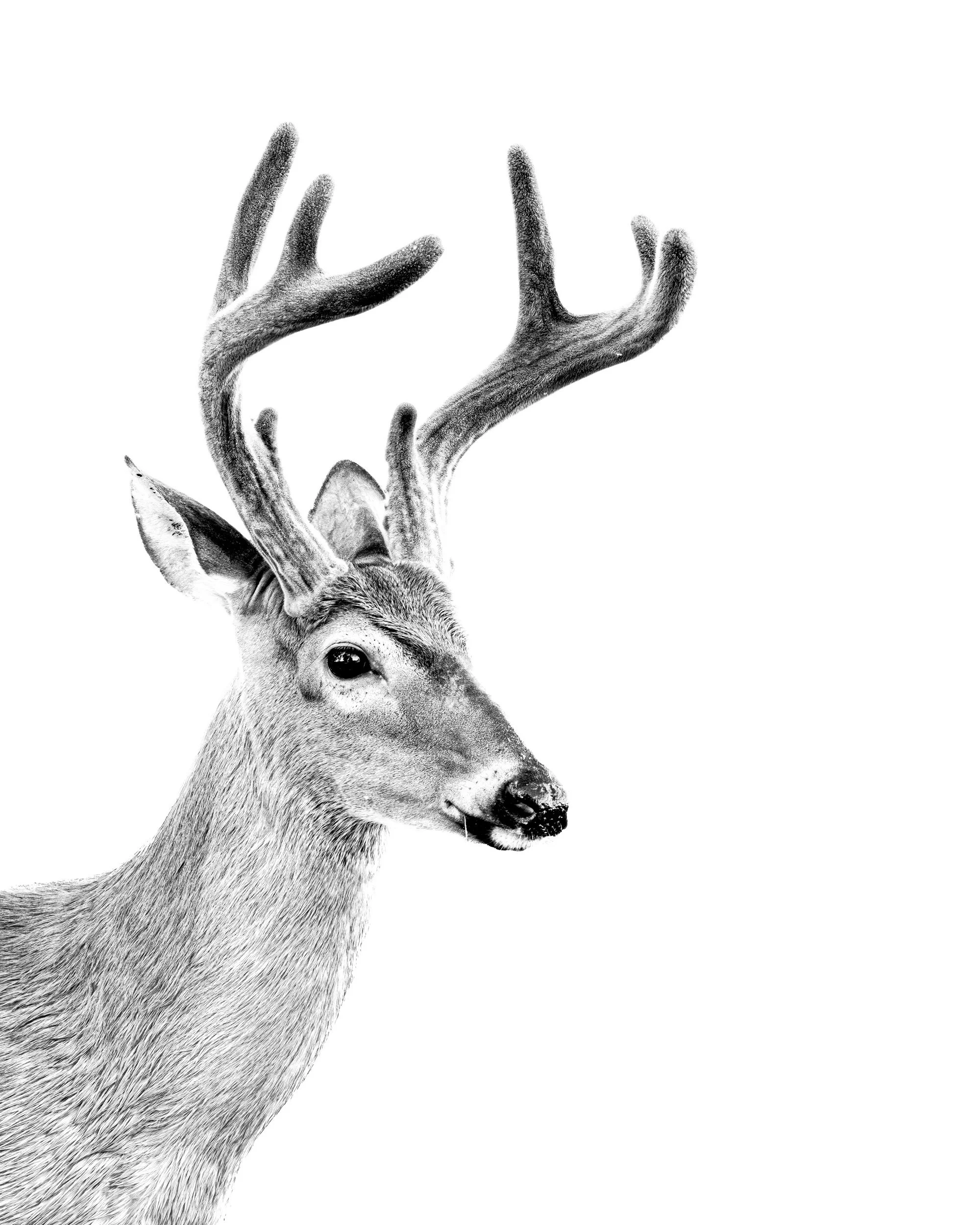
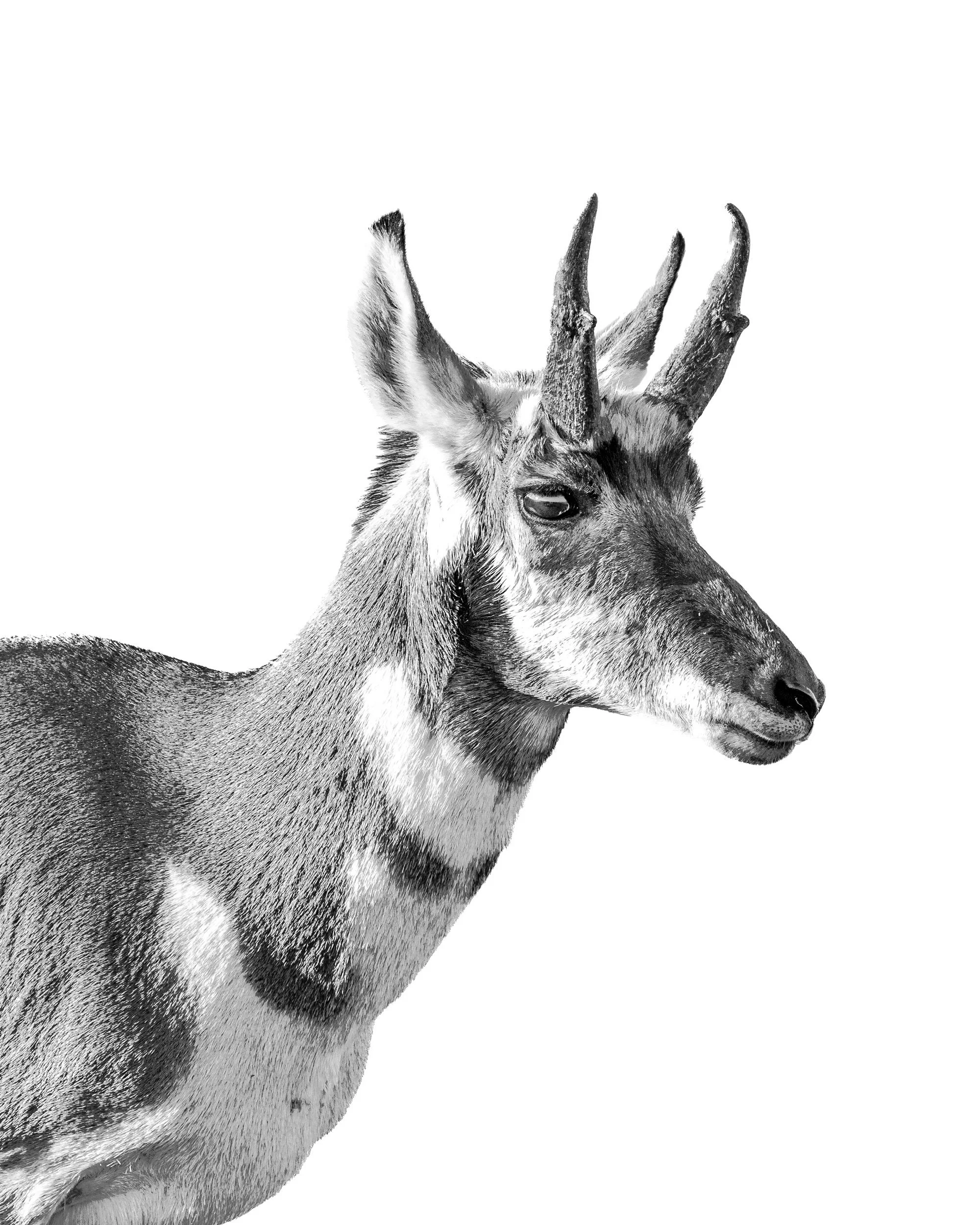
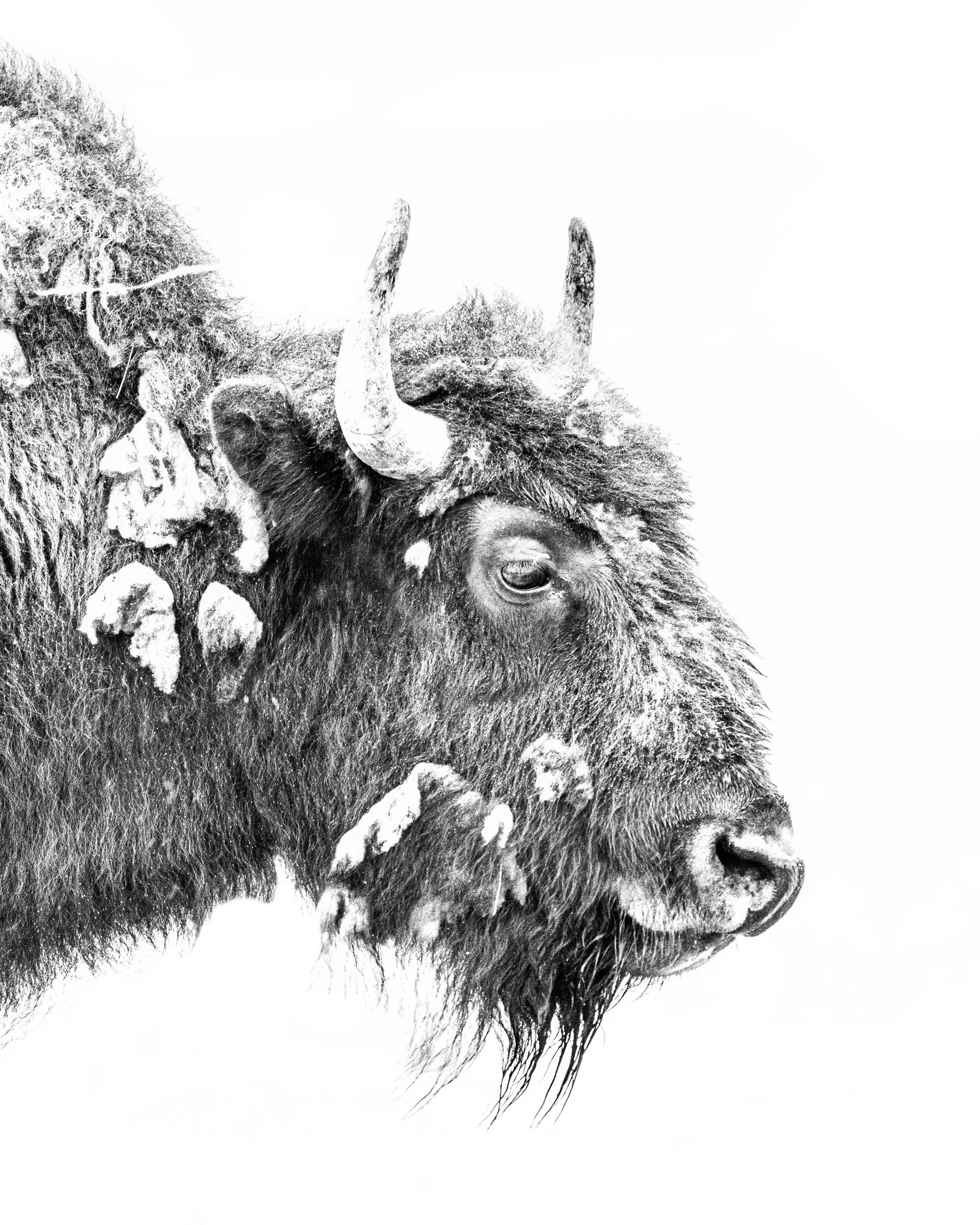
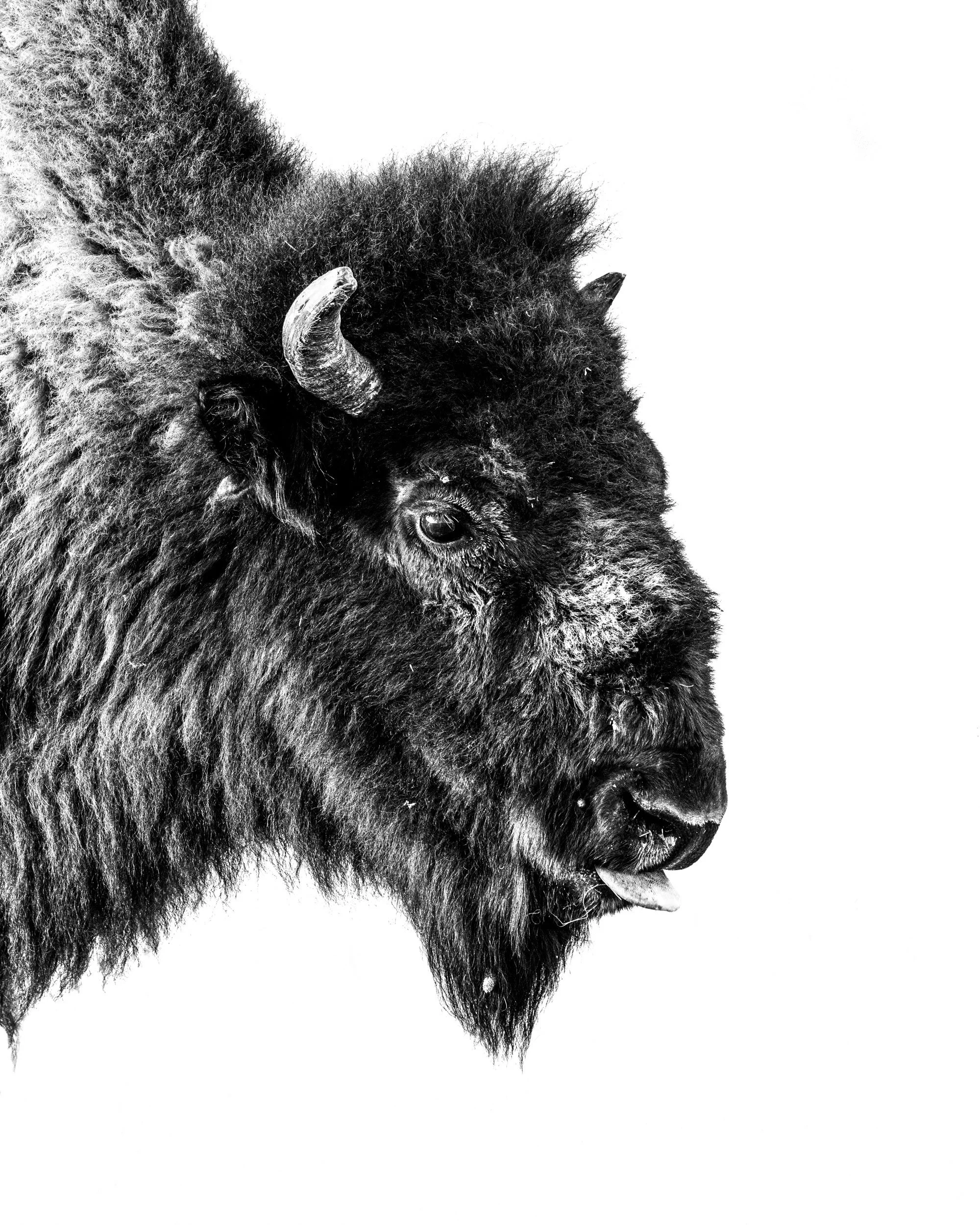
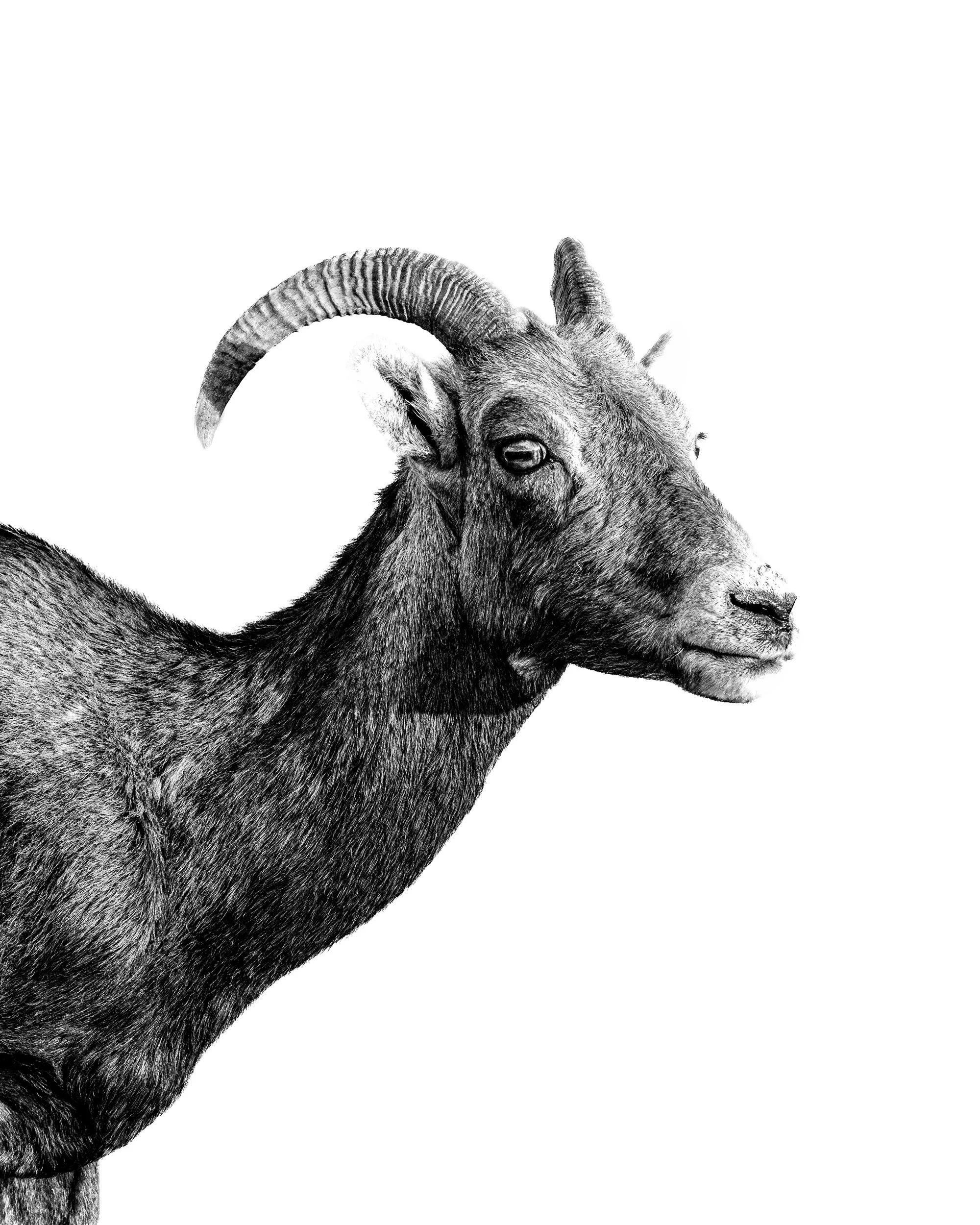
Each photograph isolates a single animal—removed from landscape, scale, and narrative context—so that what remains is not habitat or behavior, but encounter. By stripping the frame to white, the images suspend these animals outside of time and place, asking the viewer to meet them not as wildlife subjects, but as individual beings.
The work progresses deliberately across species: bighorn, bison, pronghorn, and deer. Together they form a quiet arc of North American wildness—strength, endurance, and vigilance—yet the intent is not taxonomy. Instead, the series examines how animals hold themselves when nothing is demanded of them. There is no action, no drama, no spectacle. Only posture, gaze, and the accumulated weight of lived instinct.
The high-key treatment functions as more than an aesthetic choice. It removes visual hierarchy and environmental cues, forcing the eye to slow down. Texture becomes language: the worn horn of the ewe, the weathered mass of the bison’s face, the soft velvet geometry of the buck’s antlers. In this absence of context, the viewer is invited to project inward rather than outward—to notice how long they linger, where their attention rests, and what emotional register each animal quietly occupies.
Embedded within this stillness is an unavoidable truth: these animals exist within systems that are increasingly fragile. By removing visible signs of landscape and human influence, the photographs do not deny that reality—they sharpen it. What is absent from the frame becomes part of the conversation. The work asks the viewer to consider what must be preserved for these lives to continue existing with the same autonomy and dignity with which they are portrayed here.
Viewed together, the photographs create a rhythm of restraint. The animals do not confront the viewer aggressively, nor do they retreat. They simply remain. This balance generates a subtle tension: the awareness that these are powerful, autonomous lives whose continued presence is not guaranteed.
The series is structured to be experienced sequentially but not narratively. There is no beginning or end—only variations of stillness. The images ask the viewer to slow their pace, to experience looking as a form of respect, and to recognize that conservation begins not with intervention, but with attention.
Ultimately, this work is not about wildlife as spectacle, nor about wilderness as scenery. It is about recognition—the quiet moment when observation becomes connection, and connection becomes responsibility.